Saturday, November 28, 2015

Module 12: Knucklehead: Tall Tales and Mostly True Stories about Growing up Scieszka


Knucklehead: Tall Tales and Almost True Stories of Growing up Scieszka
Book Summary: 
Jon Scieszka is probably best known for his humorous children’s picture books The True Story of the Three Little Pigs and The Stinky Cheese Man: And Other Fairly Stupid Tales. In this tongue-in-cheek autobiography, readers get a glimpse of Jon’s life as a young boy and a few events that made him the man he is today. From crazy Halloween costumes to trading chores, this book has it all. His hilarious stories of growing up with five brothers and the zany things they thought up to do will have readers laughing out loud.

APA Reference of Book:
Scieszka, J. (2005). Knucklehead: Tall tales and mostly true stories about growing up Scieszka. New York, NY: Viking Publishing.

Impressions:
This book is a random gathering of thoughts from funny children's author Jon Scieszka. He is the second-oldest in a family of 6 boys, and he has a plethora of stories of his crazy childhood and the fun and zany times they had growing up. Each chapter is just a few pages of a fondly remembered story that happened sometime during Jon's childhood, and together they give a glimpse into the life that he had as a child.

A fun read for ages 10+. Boys especially will enjoy the crazy and sometimes gross stories in this book. This is also a great read for fans of all ages, young or old, as the inside look at Scieszka’s youth will provide great entertainment for all.

Professional Review:
Starred Review. Grade 3–6—Just try to keep kids away from this collection. Inspired book design makes the volume look like an old-school comic. The front cover features an elementary-aged Scieszka popping up out of a military tank, surrounded by explosions and bombers, while the back advertises a "Treasure Chest of Fun" and displays chapter titles and excerpts along with nostalgic graphics. Scieszka answers the oft-asked question, "Where do you get your ideas?" with a slew of childhood anecdotes and his family's escapades that have given him plenty of material from which to draw. Born in 1954, the second of six brothers, he writes about Catholic and military schools, buying gifts, chores, and hand-me-downs—all familiar experiences related with a specific Scieszka twist. His mother, a nurse, insisted that her sons use proper terms for anatomy ("rectum" rather than "butt") and bodily functions ("urinate" rather than "pee"), making way for several laugh-out-loud moments. Some stories are just amiably funny, such as wearing recycled Halloween costumes, while others help readers understand more about how the author developed his unique sense of humor. Although it includes the car trip story from Guys Write for Guys Read (Viking, 2005), Knucklehead is aimed at a younger audience. Family photographs and other period illustrations appear throughout. Entertaining and fast-moving, silly and sweet, this homage to family life is not to be missed.

Whitehurst, L. S. (2008, October). Knucklehead: Tall tales and mostly true stories about growing up Scieszka [Review of the book Knucklehead: Tall tales and mostly true stories about growing up Scieszka by Jon Scieszka]. School Library Journal, 54(10), 174. Retrieved from http://www.amazon.com/Knucklehead-Almost-Stories-Growing-Scieszka.


Library Uses:
This book would great to use for a unit on authors for classroom studies. It could be part of a display highlighting authors, or as part of a display about Jon Scieszka himself and his works. It is also a great book to use to introduce autobiographical writing.

Friday, November 13, 2015

Module 11: The Tarantula Scientist


595233

Book Summary:
Tarantulas are amazing creatures. The information about the Goliath birdeater tarantula found in French Guiana in South America is one example of the uniqueness found in the varieties of tarantulas around the world.

In this book, Sy Montgomery presents an array of interesting facts about different species of tarantulas. She spent time with world experts studying these arachnids and learning more about how they interact with the world around them. There is information about mating habits and feeding behaviors, along with details about body structure and information about how they shed the outer layer of their body, the exoskeleton.

Spiders are regularly seen as creepy, dirty creatures, and Montgomery brings a new light to a topic that both fascinates and alarms most people.

APA Reference of Book:
Montgomery, S. (2004). The tarantula scientist. New York, NY: Houghton Mifflin Company.

Impressions:
I was introduced to Sy Montgomery and her work a couple of years ago at a conference, and I was extremely impressed with her and her method of research. She strives to provide as accurate of information as possible, and it shows in her writing. She spends her time traveling around for research, and she meets the most interesting people and finds some of the most interesting subjects imaginable. I think she could make anything excting.

This book was no exception. I found myself both creeped out a little and at the same time awed and amazed at a creature that I knew very little about before reading this book. The tarantula is presented in such a fascinating way as to make it appealing to all who take the time to read this book. They are such unique creatures, and the information found here provides an open door to those who wish to learn more. Science comes alive when Montgomery writes for children.

Professional Review:
School Library Journal: Grade 5-10-Superb color photos abound in this spectacular series addition. Readers follow the career of Sam Marshall, tarantula scientist extraordinaire, from his "Spider Lab" at Hiram College in Ohio to the rain forests of French Guiana as he hunts for, finds, and studies the creatures he loves so well. The conversational text contains as much spider lore as scientific investigation and provides a cheerful look at a dedicated scientist. (The fact that he did not do well in school may encourage those late bloomers who have not yet found their passion in life or believe it to be far beyond their academic grasp.) Informative, yes, but even more important, this is a vivid look at an enthusiastic scientist energetically and happily at work, both in the field and in the lab, questioning, examining, testing, and making connections. A treat, even for arachnophobes.

Booklist: Gr. 4-7. Montgomery and Bishop, who worked together on Snake Scientist (1999), team up once again to deliver another fascinating slice of the natural world. This time they venture to the French Guiana rain forest, where they follow arachnologist Sam Marshall on his quest for his favorite quarry: tarantulas. Enthusiasm for the subject and respect for both Marshall and his eight-legged subjects come through on every page of the clear, informative, and even occasionally humorous text. Bishop's full-color photos, which concentrate on detail, not scale, are amazing--Marshall coaxing an elusive tarantula into the open or bringing readers literally face-to-face with a hairy spider. The section on students' research seems tacked on, but it adds an interesting sidelight to the book, which is longer and richer in both text and illustrations than others in the Scientists in the Field series. Readers will come away armed with facts about spiders in general and tarantulas in particular, but even more important, they'll have a clear understanding of how the answers derived from research become the roots of new, intriguing questions.

Manning, P. (2005, October).  The Tarantula Scientist [Review of the book The tarantula scientist by Sy Montgomery]. School Library Journal, 51(10), 64. Retrieved 11/7/15 from http://www.amazon.com/Tarantula-Scientist-Scientists-Field/dp/061891577X/ref=sr_1_1?ie=UTF8&qid=1446926657&sr=8-1&keywords=tarantula+scientist

Zvirin, S. (2004, March 15). The tarantula scientist [Review of the book The tarantula scientist by Sy Montgomery]. Booklist, 100(14), 1304. Retrieved 11/7/15 from http://www.amazon.com/Tarantula-Scientist-Scientists-Field/dp/061891577X/ref=sr_1_1?ie=UTF8&qid=1446926657&sr=8-1&keywords=tarantula+scientist

Library Uses:
This is a great book for a lecture or segment on spiders. The photos make great visual references, and the little tidbits of information would make great quote blocks. This would also be great for a display (preferably behind glass) that included specimens and other tactile objects to view.


Saturday, November 7, 2015

Module 10: Here Lies the Librarian

39973
Book Summary:
It’s the early 20th century, and cars are just beginning to replace horses as the preferred mode of transportation. Life is changing across the country as roads are paved, making way for these new-fangled automobiles.


Eleanor, known to her small town as Peewee, and her brother Jake have lived alone in their small farmhouse since their parents passing. Peewee prefers working with Jake repairing cars to wearing dresses and attending tea parties, and she aims to stick around when she gets older and help her brother run a car repair shop. She would much rather wear overalls than dresses, much to the dismay of her older brother.

Then Peewee meets four strongly independent young women, students at a nearby college who are pursuing their library degrees. Soon she is learning that it is possible to be her own person while still being a girl. When her brother is injured driving in a car race, does she have what it takes to finish the race and prove to them all that a girl is just as capable?

APA Reference of Book:
Peck, R. (2006). Here lies the librarian. New York, NY: Dial Books Publishing.

Impressions:
Here Lies the Librarian is a quick historical fiction read. I really enjoyed Peewee’s thoughts and comments on life as she grew into a strong young woman. She surprised herself in how much she actually wanted to be ladylike when she was shown that she could be both a woman and an independent thinker. Her interactions with the four young ladies who came to run the library showed her that educating oneself did not make a person stuck up and stuffy, but rather knowledgeable about life. It better prepares a person to make the best life for themselves that they can.

As a librarian, I also enjoyed reading about the library itself and how it was run. I’m not very familiar with this particular decade, and the new inventions and changes that were taking place in this field were coming in leaps and bounds. I really enjoyed the presentation of the new library to the people who lived in this small town and the impact it had on the community.

Professional Review:
Stubborn, fearless, and loyal, 14-year-old Peewee (Eleanor) McGrath, who dresses like a boy, lives with her brother, Jake, in Indiana, "way out in the weeds." Together, they run a struggling garage, where Jake is building a racecar. It's 1914, and the electric self-starter has made automobiles more accessible to women. One day, four female drivers, library students all, arrive in a Stoddard-Dayton in need of repair; later, they return to reopen the town library. With these young women as role models, Peewee comes to realize that being female and being independent aren't mutually exclusive. Peck's one-liners, colorful physical comedy, and country dialect, prominent in most of his recent novels, are great as usual. And his characters, if not fully developed, are wonderfully quirky. Yet even with some exciting scenes of old-time dirt-track racing, the pace lags, and the story is choppy. Young fans of Danica Patrick, today's "Queen of the Road," may want to read this, but it will probably be librarians who'll have the most fun. Peck recounts an incident in an endnote in which one of the characters appears at the Indianapolis 500 with Janet Guthrie; unfortunately, there's not enough explanation to know whether or not it's all true.

Zvirin, S. (2006, March). Here lies the librarian [Review of the book Here lies the librarian by Richard Peck]. Booklist, 102(13), 91. Retrieved from http://www.amazon.com/Here-Lies-Librarian-Richard-Peck/dp/0142409081/ref=sr_1_1?ie=UTF8&qid=1446923800&sr=8-1&keywords=here+lies+the+librarian

Library Uses:
This would be a great book for a tween or younger teen book club read. Discussions can be about historical setting, family relationships, and gender roles. This book could also be part of a larger display/discussion about gender roles and the changes that have occurred in the last century. 

Sunday, October 25, 2015

Module 9: Cam Jansen and the Ghostly Mystery


Book Summary:
Jennifer “Cam” Jansen is excited to see the Triceratops Pops concert, but before she can buy her ticket, a person in a ghost costume runs through the building, scaring people as they go. The ghost runs up to an old man, yells “Boo!” and runs away. The old man grabs his chest and falls to the floor, and the crowd is left to help with the medical emergency. While the people in line are distracted by the scene, the ghost runs by the ticket office, grabbing the money box as they go, stealing all of the ticket money. 

A crime has been committed, but no one knows who did it because they were covered up in the ghost costume. Now Cam and her friend Eric are on the case. She will need her photographic memory to save the day, and she thinks back over all the details she could remember about the scene of the crime. Little flashes of memory come back to her, and learning that the old man who fell at the ticket booth was actually an accomplice to the crime provides more clues. Will Cam and Eric solve the mystery?

APA Reference of Book:
Adler, D. A. (1996). Cam Jansen and the ghostly mystery. New York, NY: Scholastic, Inc.

Impressions:
Cam is a great sleuth. She thinks logically about things she knows and utilizes her photographic memory to remember important details of the mystery at hand. She’s realistic and fun, and readers can relate to her and her friend. Her Aunt Molly is incredibly quirky, which provides more for readers to think about when they are trying to follow what she is trying to say.

One important thing to note about Cam and her mystery solving adventures is that she is extremely conscientious about staying safe. She does what she can, following her clues and finding evidence, but when it is time to let the authorities do their job, Cam and Eric are responsible and call for the police. The adults in this story are great in the way that they treat Cam and Eric as a valuable asset rather than deeming them not worth the time it would take to listen to their suggestions. I think this an important thing to teach young readers. Other mystery books have the amateur detectives rushing into dangerous situations with no thought for the possible consequences, and it is good for readers to see a positive role model for how to deal with something that may become a danger to the young investigators.

Professional Review:
Gr. 2-4. Cam Jansen, the girl with the photographic memory, returns in her sixteenth mystery. Here, she and her pal Eric are waiting in line to buy tickets for a rock concert. The ticket booth gets robbed by someone dressed as a ghost, but it doesn't take Cam long to figure out the connection between the ghostly robber and the distraction of a man who has a "heart attack" in line. A very quick read, this should give new readers a push into beginning chapter books and offer reluctant readers a mystery that isn't babyish.

Cooper, I. (1997, January). Books for middle readers: Fiction [Review of the book Cam Jansen and the ghostly mystery]. Booklist, 93(9/10), 855. Retrieved from http://www.buffalolib.org/vufind/Record/890154/Reviews

Library Uses:

This would be a great group read for second and third graders. There is a lot to discuss about the way Cam uses clues to solve the mystery. This could also be used as part of an additional materials list for those learning about different types of memory.

Thursday, October 22, 2015

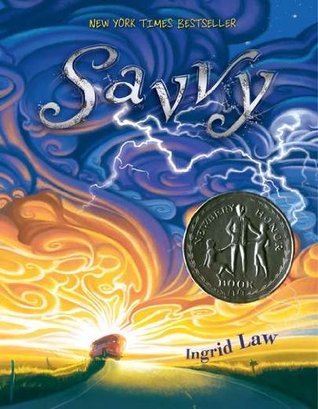
Module 8: Savvy

2133795
Book Summary:
Everyone in Mibs’ family has a special talent, known as their savvy, that they receive on their thirteenth birthday. Her mother does everything perfectly, even when it’s a mistake. Her grandmother could catch music in a jar. Her grandfather causes the ground to move.

Now it's finally her turn! Mibs is celebrating her thirteenth birthday, and she will finally find out what her savvy is. Will it be talking to animals? Seeing sounds? Only time will tell. Then tragedy strikes - her father is a car accident and is now in a coma. Will Mibs get a savvy that could save him?

Full of quirky characters and wild adventures, Savvy is the story of Mibs and her quest to save her father’s life. She is joined by her brother and a few new friends along the way, and somewhere between pink buses, flying pies, and police cars they must make their way to the hospital to find Mibs’ father.

APA Reference of Book:
Law, I. (2008). Savvy. New York, NY: Dial Books for Young Readers.

Impressions:
This is a fun book about abilities and talents and family relationships. The growing friendship between Mibs and Will and Mibs and Bobbi are great examples of how people aren't always who they seem to be, and sometimes a person just want someone to see them and like them for who they really are. I'm really interested to see what Sampson's savvy is, although it seems as though he already has inklings of it showing through in his behavior, even at his younger age.

I read this as part of a mother-daughter book group, and the girls had plenty to talk about in wondering what their own savvies could be and how this is somewhat reflected in real life in the various talents individuals have. A great group read, and one that readers of all ages who enjoy a little light fantasy in their books will really enjoy.

Professional Reviews:
Grades 5-7. Upon turning 13, each member of the Beaumont family develops a supernatural ability, or savvy, which must then be tamed. Well aware of the problems savvys can bring (the family had to relocate when one child had difficulty controlling his storm-producing savvy), 12-year-old Mississippi (Mibs) awaits her birthday eagerly but with a bit of trepidation. Then Poppa is seriously injured in an accident far away, and Momma goes to his side, leaving Mibs and the rest of the family to cope with Mibs’ 13th birthday on their own. Initially believing that her savvy is the ability to restore life, Mibs sets her course for Poppa. Joined by her brothers and the local preacher’s kids, she sweet talks her way onto a traveling Bible salesman’s bus. On the journey, however, Mibs realizes her savvy isn’t what she thought, which opens the way for a number of lively adventures both geographic and emotional. Law’s storytelling is rollicking, her language imaginative, and her entire cast of whacky, yet believable characters delightful. Readers will want more from Law; her first book is both wholly engaging and lots of fun.

Savvy. (2008, May 15). [Review of the book Savvy by Ingrid Law]. Booklist Magazine, 104(18). Retrieved from http://www.esebco.com/books/show/104616/searches/104616

Library Uses:

While great for a book club read, as mentioned above, this would also make an interesting display for different talents and abilities. This book could be the main focus of the display, with suggestions for savvies put on display, such as cooking utensils for great chefs, sewing needles and thread for those who are good at sewing, and sports equipment for those who are athletic. The possibilities are endless. It could also be an interactive display, one where patrons could add to it will savvies of their own, such as a whiteboard or post-it note display.

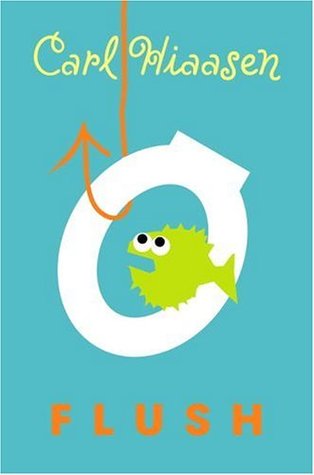
Module 7: Flush


Flush

Book Summary:
The Coral Queen is dumping its raw sewage directly into the ocean, and Noah's dad is determined to do something about it. When he ends up in jail, he enlists Noah to help him get evidence of the wrongdoing, but it could prove dangerous when a former employee of the casino boat ends up missing.

Throughout the fight for justice, Noah and his sister Abby must deal with nosy reporters, neighborhood bullies, and gun-toting bad guys to catch the crooks and put the evidence out there for all to see. They are determined to put a stop to the polluting of their beloved ocean, even when they may be putting themselves in harm’s way.

APA Reference of Book:
Hiaasen, C. (2005). Flush. New York, NY: Knopf Books for Young Readers.

Impressions:
Full of manatees, sea turtles, and mangroves, this book has great description of the environment of the Florida Keys. I’ve never been to this area, but I could easily picture the scenery and had a great feel for the setting.

I especially enjoyed Hiaasen’s sense of humor in this book. There were plenty of snarky comments and quirky characters, giving the story a personality of its own. Noah and his sister are good kids who love their parents, and though they may fight as siblings tend to do, they look out for each other and work together to accomplish their goals, whether that be buying stuff at the grocery store or preventing their mother from seeing their father’s latest exploits on the news.

This is a great fast-paced adventure novel for those who love for the underdog to find a way to win in the end. It has plenty of intrigue and backstabbing while still having a well written storyline. I know Hiaasen has plenty of fans, but I would also recommend this for fans of Sachar's Holes as it has a similar feel to the mystery and a similar type of danger.

Professional Reviews:
Booklist: Gr. 5-8. Hiaasen's second novel exhibits some of the same elements found in his 2003 Newbery Honor Book: Florida local color, oddball adults (buxom and brawny), and a delightful quirkiness. But the sparkle that catapulted Hoot into the limelight isn't quite as brilliant here. Even so, there's plenty to like in this yarn, which, once again, drops an environmental issue into the lap of a kid. Righteous indignation, usually resulting from some sabotage of Florida's natural resources, has gotten Noah Underwood's dad in trouble before. This time, however, Dad's gone too far: he sunk a floating casino. Why? Its owner is dumping human waste in the water. Unfortunately, Dad can't prove it, and that's where Noah and his younger sister, Abbey, come in. The amateur sleuthing puts the sibs into some mildly suspenseful, occasionally amusing, situations, which, as in the previous book, share space with run-ins with a local bully (Noah takes some lumps but gets sweet revenge). An old-fashioned deus ex machina interrupts an otherwise believable setup, but Hiaasen still succeeds at relating an entertaining story while getting across a serious message about conservation and the results of just plain greed.

School Library Journal: "Noah and his sister, Abbey, are more understanding of their volatile dad's latest arrest than their mother, who begins talking of divorce. Dad sank the Coral Queen, a casino boat on a Florida Key because, he alleges, its owner, Dusty Muleman, has been illegally dumping raw sewage into the local waters. Soon enough the kids begin trying to gather proof that will vindicate their father and put the casino out of business. The colorful cast includes a drunken lout named Lice who disappears before he can be persuaded to testify against Dusty, his former boss. His rough-around-the-edges girlfriend, Shelly, comes through, though, helping the siblings dump dye in the boat's holding tanks, which finally brings the matter to court. Dusty's son, Jasper, is a chip off the old block, threatening and beating Noah on several occasions until he and, later, Abbey are rescued by a mysterious stranger who turns out to be their grandfather, long ago thought to have died in South America, probably while involved in drug smuggling. As the tale ends, he's back to Colombia to settle old scores. The plot would practically disappear if any one of the major characters had a cell phone, but the environmental story is front and center and readers will be hooked as the good guys try to do the right thing. This quick-reading, fun, family adventure harkens back to the Hardy Boys in its simplicity and quirky characters."

Svirin, S. (2005, August). Flush [Review of the book Flush by Carl Hiaasen]. Booklist Magazine, 101(22), 2028. Retrieved from https://brooklyn.bibliocommons.com/item/show/11240257062906_flush

Shoemaker, J. (2005, September 1). Flush [Review of the book Flush by Carl Hiaasen]. School Library Journal, 59(9), 204. Retrieved from http://www.esebco.com/books/show/66850/searches/66850

Library Uses:

This would be a great book club read for older middle school to younger high school students. There is plenty to discuss about the environment and global pollution, and can give students thoughts about what they can do to make the world a better place.

Saturday, October 3, 2015

Assignment A: Booktrailers

Booktrailer for The Forest of Hands and Teeth by Carrie Ryan


Booktrailer for Life as We Knew It by Susan Beth Pfeffer


Booktrailer for Dark Life by Kat Falls


References:
Falls, K. (2010). Dark life. New York, NY: Scholastic Press.

Pfeffer, S. B. (2006). Life as we knew it. New York, NY: HMH Books for Young Readers.

Ryan, C. (2009). The forest of hands and teeth. New York, NY: Delacorte Press.